Ten million panels to wash

Dust is not a rounding error
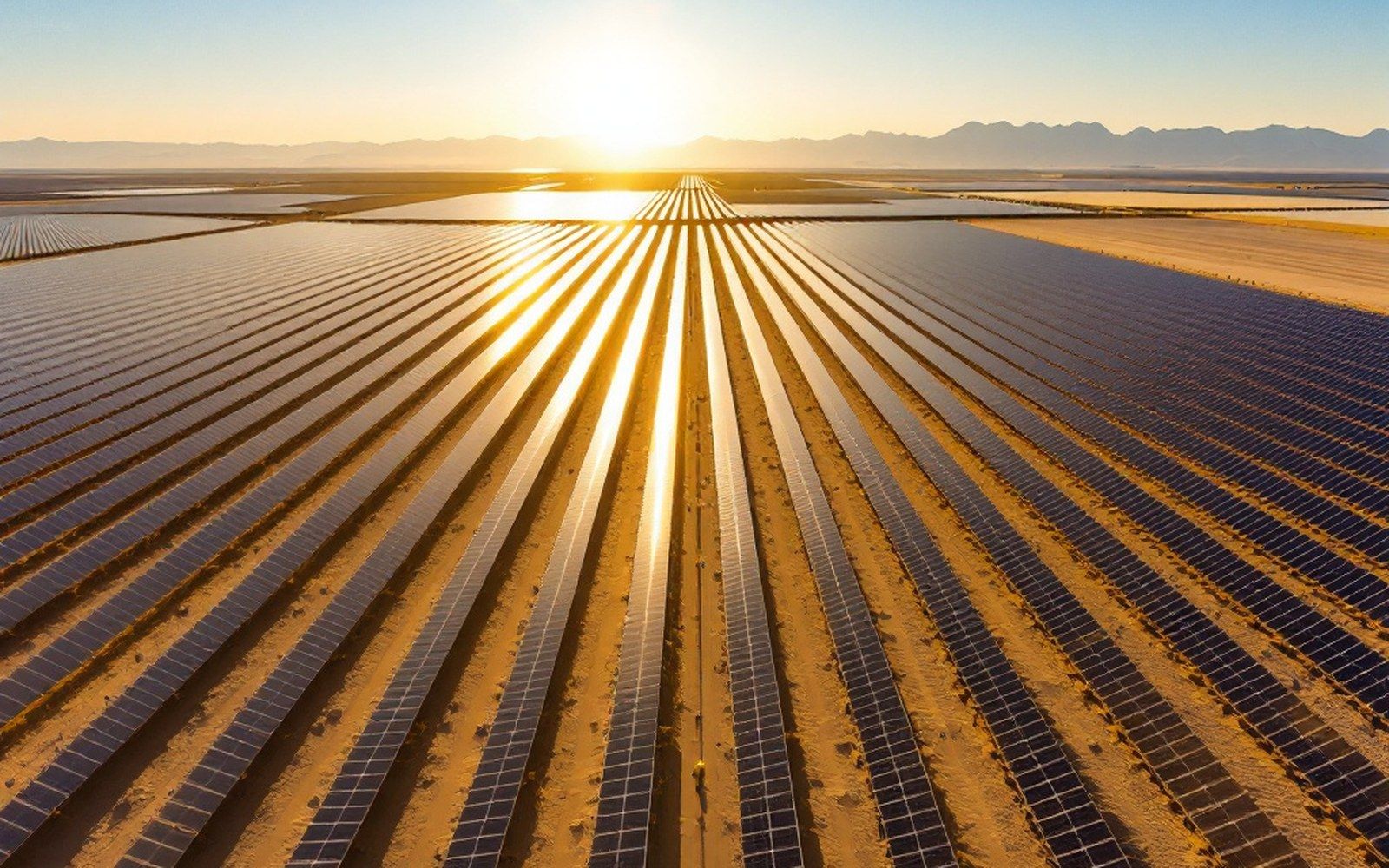
A layer of fine particulate on a solar panel's glass surface does not simply reduce output slightly — it does so in a measurable, predictable way that operators track as soiling loss. At sites in arid climates, unmitigated soiling can cut generation by 30 to 40 percent within weeks. The IEA's analysis of utility-scale solar performance treats soiling as one of the primary contributors to the gap between nameplate capacity and actual yield. At a site the size of Bhadla in Rajasthan, where 2,245 MW sit across 14,000 acres of Thar Desert, that gap is an engineering problem with a budget attached.
The loss mechanism is straightforward. Dust particles scatter and absorb incoming light before it reaches the silicon. Fine particles — smaller than ten micrometres — are the most adhesive; they bond electrostatically to glass and resist removal by wind. Pollen, salt aerosol and industrial soot compound the basic mineral dust problem at sites near coastlines or agricultural land. Research published by the National Renewable Energy Laboratory finds that soiling rates vary from under one percent per month in temperate, wet climates to several percent per week in desert installations.
Cleaning at scale
Cleaning is done three ways: manually by labour with deionised water and brushes, by automated robotic systems that traverse panel rows, or by dry-brush robots that use no water at all. The third approach has gained ground precisely because water scarcity is worst where soiling is worst. Al Dhafra in Abu Dhabi, a 2-gigawatt site in the UAE, runs dry-cleaning robots across its array on a schedule calibrated to measured soiling rates — a logistics operation at a scale comparable to maintaining a small airport.
Soiling loss feeds directly into project economics through the capacity factor — the ratio of actual output to the maximum possible.
The cost is real and site-specific. Water-based cleaning at a large desert installation consumes millions of litres per year. Trucking or piping water to remote sites adds further cost and carbon overhead. Hydrophobic anti-soiling coatings, applied to panel glass at manufacture, reduce accumulation but do not eliminate it, and their effectiveness degrades over the panel's twenty-five-year service life.
Soiling loss feeds directly into project economics through the capacity factor — the ratio of actual output to the maximum possible. A project modelled at a 25 percent capacity factor and suffering a sustained 5 percent soiling loss delivers less energy than contracts assumed. Lenders and offtakers now routinely require soiling monitoring as part of plant performance guarantees, and independent engineers assess it during due diligence. Dust on glass has become, in short, a line item.