Pilots, and what they prove
A demonstration that something works at one tonne is not evidence that it works at a million.
What a pilot actually shows
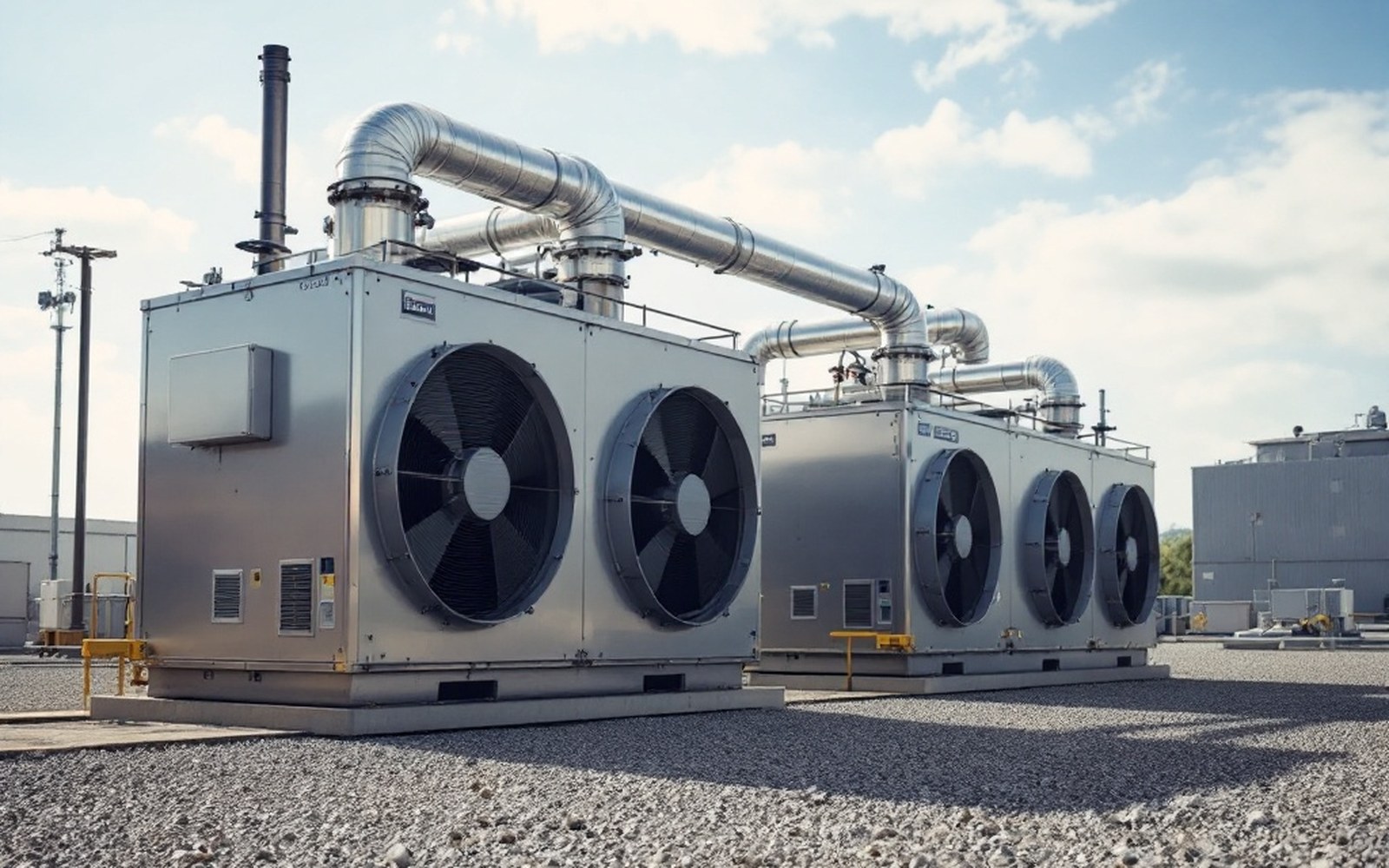
When a technology runs at pilot scale, it answers one question: can this process physically occur in the hardware we have built? At Climeworks' Orca plant in Iceland, opened in 2021 near Hellisheidi, the answer for direct air capture was yes — CO₂ can be stripped from ambient air, mineralised, and injected underground. Orca's capacity was 4,000 tonnes of CO₂ per year. Global emissions in that year were roughly 37 billion tonnes. The ratio is not a quibble; it is the measurement that matters.
A pilot does not prove that costs will fall to where they need to be, that supply chains can be assembled at volume, or that the process remains stable when you run it for a decade rather than a season. These are separate questions, and they are not answered by the fact of operation. The International Energy Agency noted in 2022 that direct air capture costs at the time ran between $400 and $1,000 per tonne — figures drawn from a handful of small facilities, with no commercial-scale plant yet operating to test whether those numbers would move in the right direction.
The confusion between demonstration and deployment is not unique to carbon removal.
The confusion between demonstration and deployment is not unique to carbon removal. Every technology that later scaled — photovoltaic cells, lithium-ion batteries, electrolysers — went through pilots that proved physical feasibility while costs were far above what deployment eventually required. The difference is that solar and batteries were pulled down the learning curve by mass production over decades. Pilot success was necessary but nowhere near sufficient.
What gets conflated, and why it matters
The error runs in both directions. Sceptics dismiss pilots by pointing out that they are small; advocates overstate them by treating physical proof-of-concept as proof of economic viability. Neither reading is accurate. What a pilot genuinely establishes is the set of engineering problems that must still be solved — materials degradation, process integration, energy consumption at scale — and it does that usefully. The National Renewable Energy Laboratory has published detailed techno-economic analyses showing how far pilot-observed costs for emerging processes sit above modelled ones, and why that gap cannot be closed by extrapolation alone.
A pilot is the beginning of an argument, not its conclusion. Scaling requires not one plant but many, not one year of data but many, and a supply chain that does not yet exist. Treating the first as proof of the last is where the field most reliably goes wrong.