The energy penalty
Separating CO₂ from air that is 0.04 per cent of the stuff costs a great deal of energy, and where that energy comes from shapes every claim made about the technology.
The arithmetic of dilution
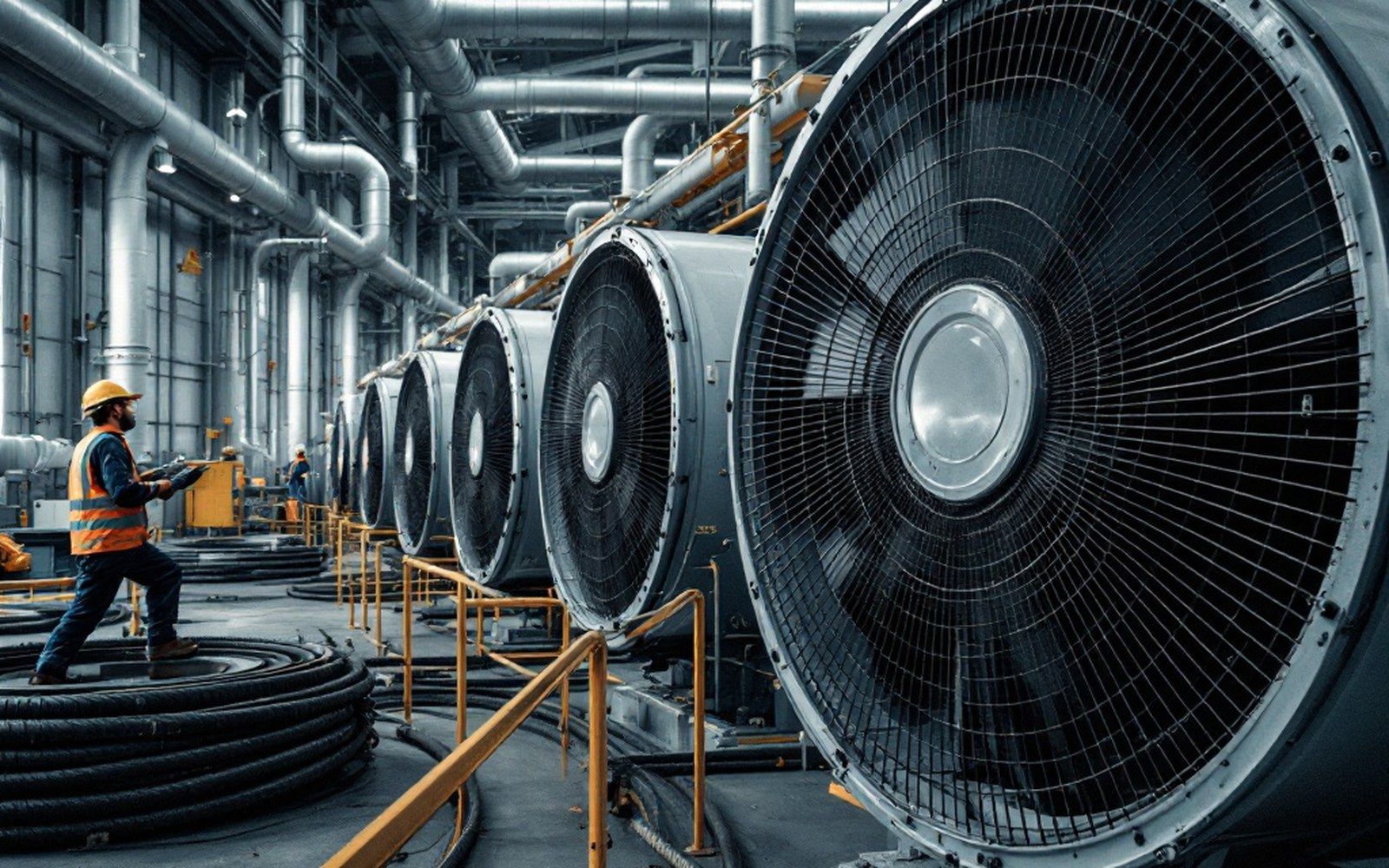
The thermodynamic minimum energy needed to separate CO₂ from ambient air is around 0.5 gigajoules per tonne of CO₂ — a number set by physics, not engineering. Real systems land nowhere near that minimum. Two of the largest direct air capture plants, Climeworks' Mammoth facility in Iceland and the Stratos plant in Texas developed from Carbon Engineering's design, require somewhere between 5 and 10 gigajoules of energy per tonne captured, depending on how heat and electricity are counted. The International Energy Agency's tracking of direct air capture puts the current energy intensity of leading facilities in that range. The gap between the physics floor and the engineering reality is called the energy penalty, and it is the central obstacle the technology has not yet cleared.
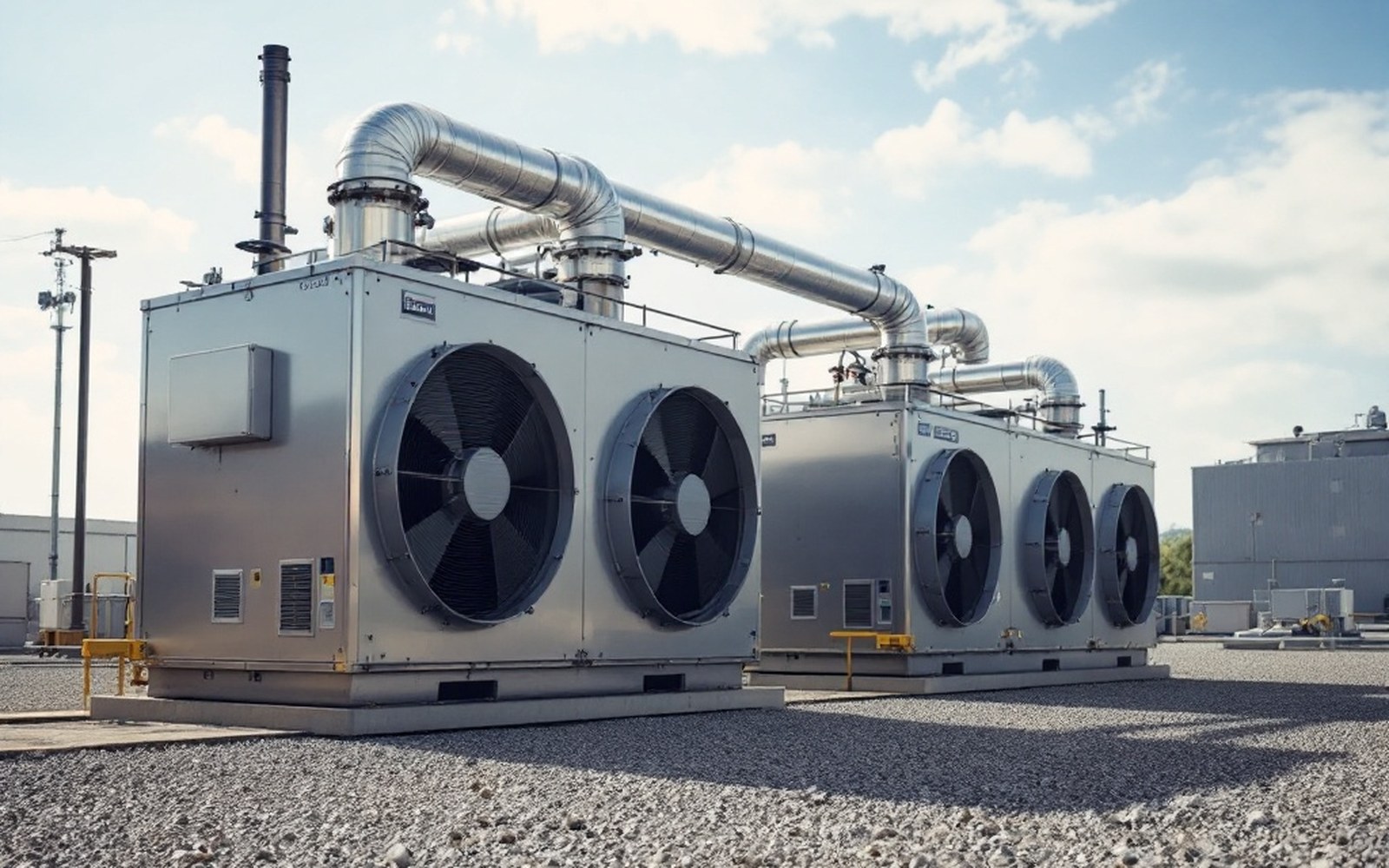
The dilution problem is intrinsic. Capturing CO₂ from a coal flue gas, where concentrations run around 10–15 per cent, costs far less per tonne than pulling it from open air at 420 parts per million. The sorbent or solvent must process vastly more gas to harvest the same amount of carbon. More gas means more fans, more contact area, more pumping — and more energy.
Where the energy goes, and where it comes from
A solid-sorbent system like Climeworks' uses a capture step — drawing air across a material that binds CO₂ — followed by a regeneration step that applies heat, typically at 80–120°C, to release the gas in concentrated form. The heat demand is large. At Hellisheidi in Iceland, Climeworks' earlier Orca plant ran on geothermal heat and electricity, a clean source that made the lifecycle accounting favourable. Mammoth, also in Iceland, does the same. A plant powered instead by a gas-fired boiler would spend a significant share of the CO₂ it captures simply offsetting the emissions from its own energy supply; at low enough efficiency, it could approach net-zero or worse.
This is not a theoretical concern. Lawrence Berkeley National Laboratory and others have modelled the break-even conditions under which a direct air capture plant powered by average-grid electricity produces a net removal rather than a net addition. The result depends heavily on the grid's carbon intensity: a plant in a high-renewables system removes carbon; the same plant drawing from a coal-heavy grid may not. Research published on this sensitivity reinforces that the energy source is not a secondary detail — it is the primary variable in whether the technology works as claimed.
That arithmetic does not make the technology useless, but it reframes the question.
The liquid-solvent route used by Carbon Engineering's plant in Squamish, British Columbia — now scaled up in the Stratos project in Texas — has a higher thermal demand still, requiring temperatures above 800°C to calcine the calcium carbonate intermediate back to lime. That calcination step, familiar from cement production, is difficult to run without combustion unless very high-temperature electric heating or concentrated heat is available.
What the number means at scale
The Fraunhofer ISE and others have estimated that capturing one gigatonne of CO₂ per year — roughly 2.5 per cent of current global emissions — using today's direct air capture technology would require between 5 and 8 exajoules of energy annually. Global electricity generation in 2023 was around 100 exajoules. Capturing at gigatonne scale would therefore consume a substantial fraction of current generation just for the capture process, before counting the energy needed to compress and transport the CO₂ for storage.
That arithmetic does not make the technology useless, but it reframes the question. Every kilowatt-hour devoted to running a direct air capture plant is a kilowatt-hour not displacing a fossil fuel elsewhere. In a world where clean electricity is still being built out, the opportunity cost is real. The sites that sidestep the problem — Iceland's geothermal fields, locations with abundant stranded renewable power — are finite. Scaling beyond them means the energy penalty becomes, in effect, a carbon penalty too, unless the grid has already decarbonised. The technology's viability at climate scale therefore depends on a prior condition it cannot itself supply.