Hornsdale answered in milliseconds
The battery that redefined grid services
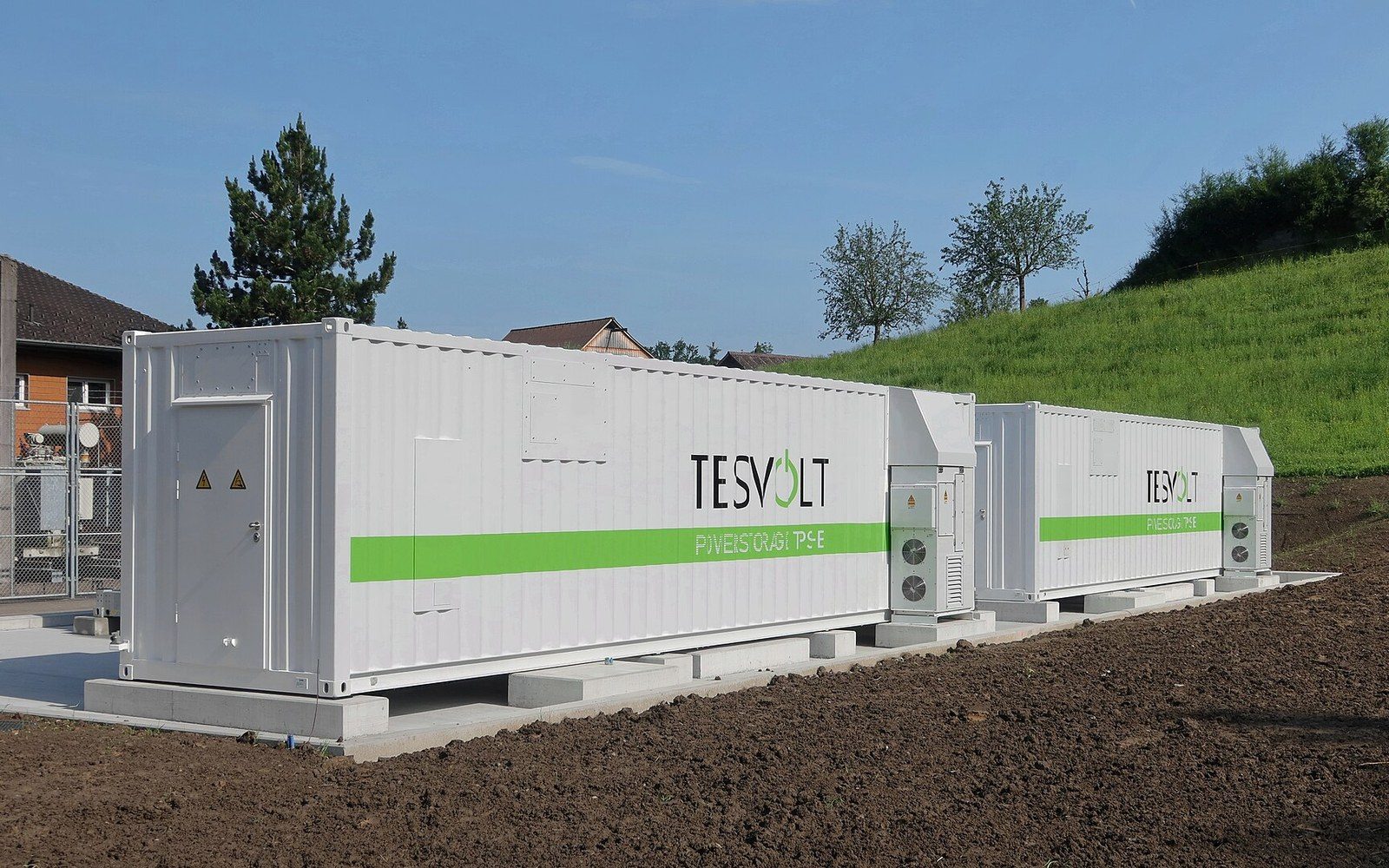
In late 2017, Tesla completed installation of a 100-megawatt, 129-megawatt-hour lithium-ion battery at Hornsdale Wind Farm in South Australia, connecting it to the grid at the beginning of December. Elon Musk had made a public bet — a hundred days or the system was free — and the deadline was met. The Hornsdale Power Reserve, as it became known, then proceeded to demonstrate something the bet had not quite anticipated: its commercial value lay less in how much energy it stored than in how fast it could release the first slice of that energy when the grid needed it.
South Australia is a useful laboratory. It runs a large share of wind generation on a transmission system that connects to the rest of the National Electricity Market through a limited number of interconnectors to Victoria. That configuration concentrates risk: when the interconnector trips, or when a large generator drops off suddenly, frequency can fall quickly and the system has to respond within seconds. Under the Australian Energy Market Operator's rules, grid operators procure what are called Frequency Control Ancillary Services — FCAS — and before Hornsdale, that market was dominated by a handful of gas peakers whose response was measured in seconds to tens of seconds.
What frequency response actually means
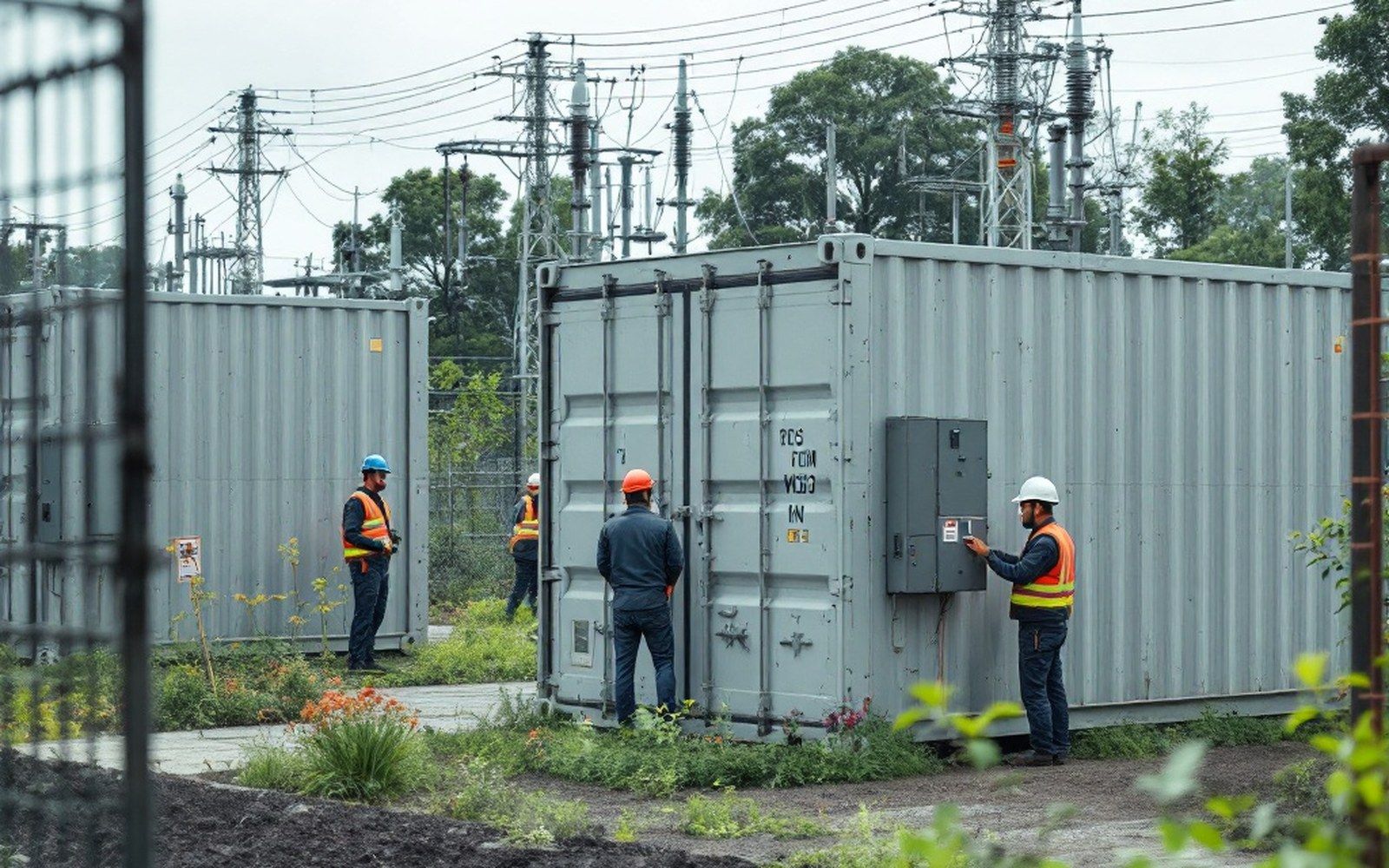
Alternating-current grids run at a nominal frequency — 50 hertz in Australia — and every generator connected to the network must spin in synchrony with that. When demand exceeds supply, or a generator trips, frequency begins to fall. The traditional defence was grid inertia: the kinetic energy stored in the rotors of large steam and gas turbines resisted the initial rate of change, buying time for governors to open valves and increase output. A system dominated by inverter-connected renewables — solar panels, wind turbines, batteries — has far less of that rotational mass, so frequency can fall faster and the response has to be quicker.
Battery inverters do not spin. They read the grid frequency electronically and can begin discharging within a few cycles — in Hornsdale's case, within roughly 140 milliseconds of detecting a frequency deviation. A gas turbine that is already running might achieve a meaningful power response in four to six seconds; one that needs to be started from cold takes minutes. The difference matters enormously at the moment a large turbine trips and frequency is in freefall.
This is not a theoretical advantage. In December 2017, weeks after Hornsdale came online, the Loy Yang A coal plant in Victoria experienced an unplanned outage, and frequency on the South Australian grid began to drop. Hornsdale responded before any conventional unit had registered the event and delivered power within milliseconds. Australian Energy Market Operator data subsequently confirmed the battery had stabilised the event far faster than the contracted gas-fired reserves. The episode was documented and the FCAS market began to reprice accordingly.
What Neoen found it was selling
Hornsdale is operated by the French renewable energy developer Neoen. The installed capacity — 100 MW of power, 129 MWh of storage — matters less here than the contract structure. Under the ancillary services rules, a unit contracted for FCAS is paid to be available and to respond; it earns separately from the energy it dispatches. Hornsdale's speed meant it could undercut conventional providers on price while capturing a disproportionate share of the response market. An independent analysis by Aurecon, commissioned before the expansion of the system, estimated that in its first year Hornsdale reduced the cost of FCAS for South Australian consumers by roughly A$40 million — a figure that circulated widely and was cited by the Australian Energy Market Commission in subsequent rule-change consultations.
Hornsdale is operated by the French renewable energy developer Neoen.
The South Australian government had contracted 70 MW of the system's capacity as a grid-stabilisation service while Neoen retained dispatch rights over the remaining 30 MW to trade in the energy market. That split matters: the grid-services contract was what justified the installation, but the wholesale energy arbitrage made the full economics work. In 2020 Neoen expanded the system to 150 MW and 194 MWh, partly because the business case had improved, and partly because AEMO was developing new market rules — specifically, a new class of fast-frequency response — that were explicitly shaped by what Hornsdale had demonstrated.
The number behind the speed
The International Energy Agency, in its 2022 analysis of battery storage, characterised grid-scale batteries as moving from niche frequency-response tools toward bulk energy storage, but it was explicit that the frequency-response application had established the commercial template. Hornsdale is the most-cited single example in that transition. What the IEA numbers show is that battery storage capacity deployed globally grew from under 1 gigawatt-hour in 2015 to over 160 GWh by the end of 2022, and that ancillary services — frequency response above all — were the dominant revenue stream through most of that growth period. The South Australian installation did not cause that trajectory, but it supplied a proof-of-concept whose data were public and whose economics were legible to grid operators elsewhere.
The figure that travels farthest from Hornsdale is milliseconds. The speed advantage of a battery inverter over a spinning machine is not marginal; it is categorical. IRENA's 2023 innovation outlook on power system flexibility puts the point quantitatively: even a modest deployment of fast-frequency response from batteries can allow a grid to operate with significantly lower synchronous inertia, which in turn allows higher penetrations of non-synchronous renewables. The causal chain — Hornsdale demonstrates response time, AEMO writes fast-frequency response rules, grid operators elsewhere adopt similar frameworks — has run across multiple jurisdictions including the United Kingdom, Ireland, and parts of the United States.
What the site looks like
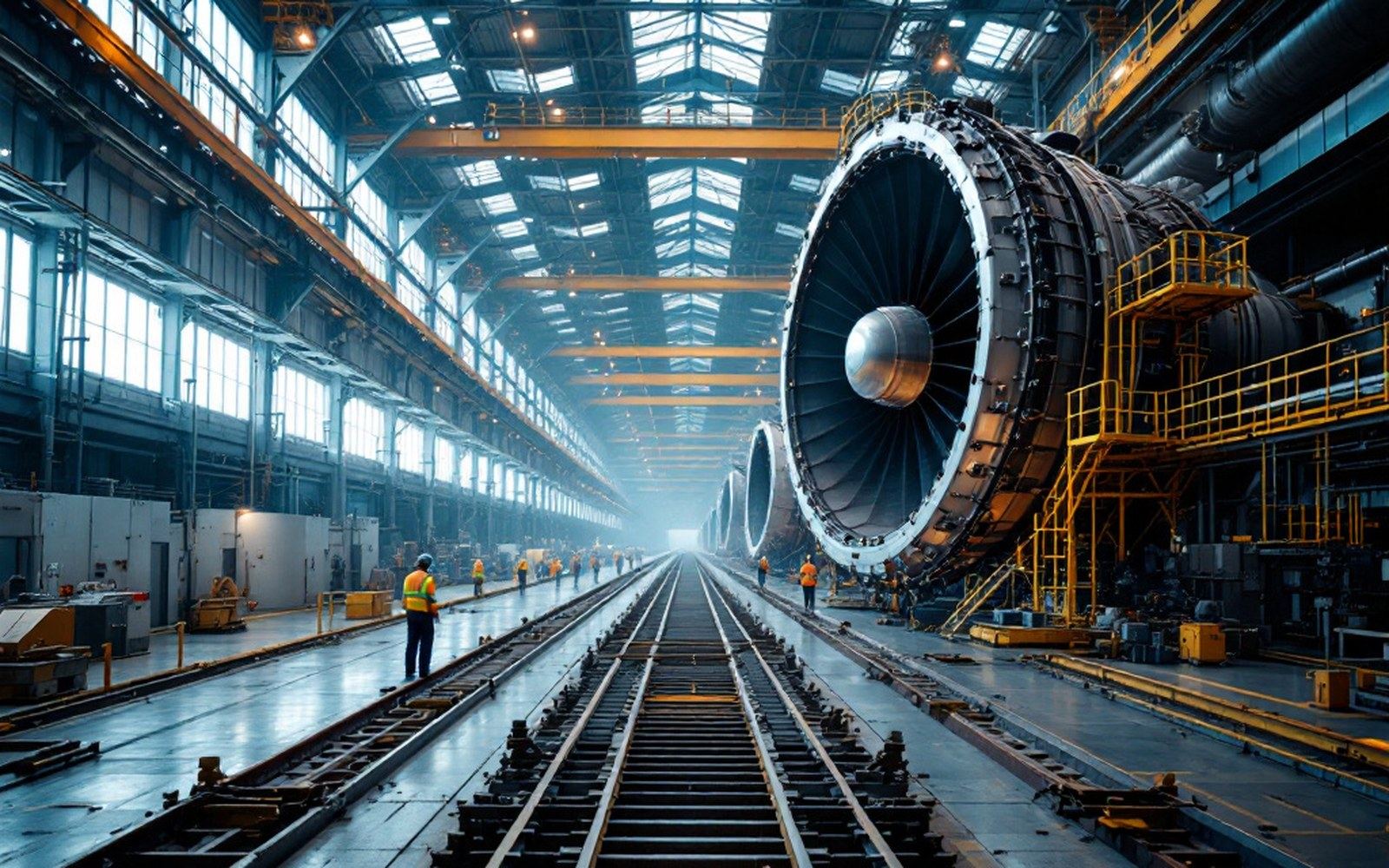
Hornsdale Power Reserve sits adjacent to the Hornsdale Wind Farm near Jamestown in South Australia's mid-north, about 230 kilometres north of Adelaide. The battery occupies a fenced compound: rows of grey shipping-container-sized enclosures housing the battery modules, a power conversion system, transformer equipment and a control building. It is unglamorous infrastructure, which is precisely the point. It connects to the existing transmission infrastructure that the wind farm already uses, and it has no cooling towers, no fuel stockpile, and no emissions at the point of use.
The site's grid connection point is the Davenport substation. From there, the power flows into the high-voltage transmission network managed by ElectraNet. The installation required no new transmission line and minimal civil works beyond the compound itself. That simplicity — a pad, containers, a transformer, a fence — is part of why the model has replicated so readily. Hornsdale showed what a fast-responding grid asset looks like when it is not a power station.