Frequency, and what spinning metal used to do
The physics that kept the lights on
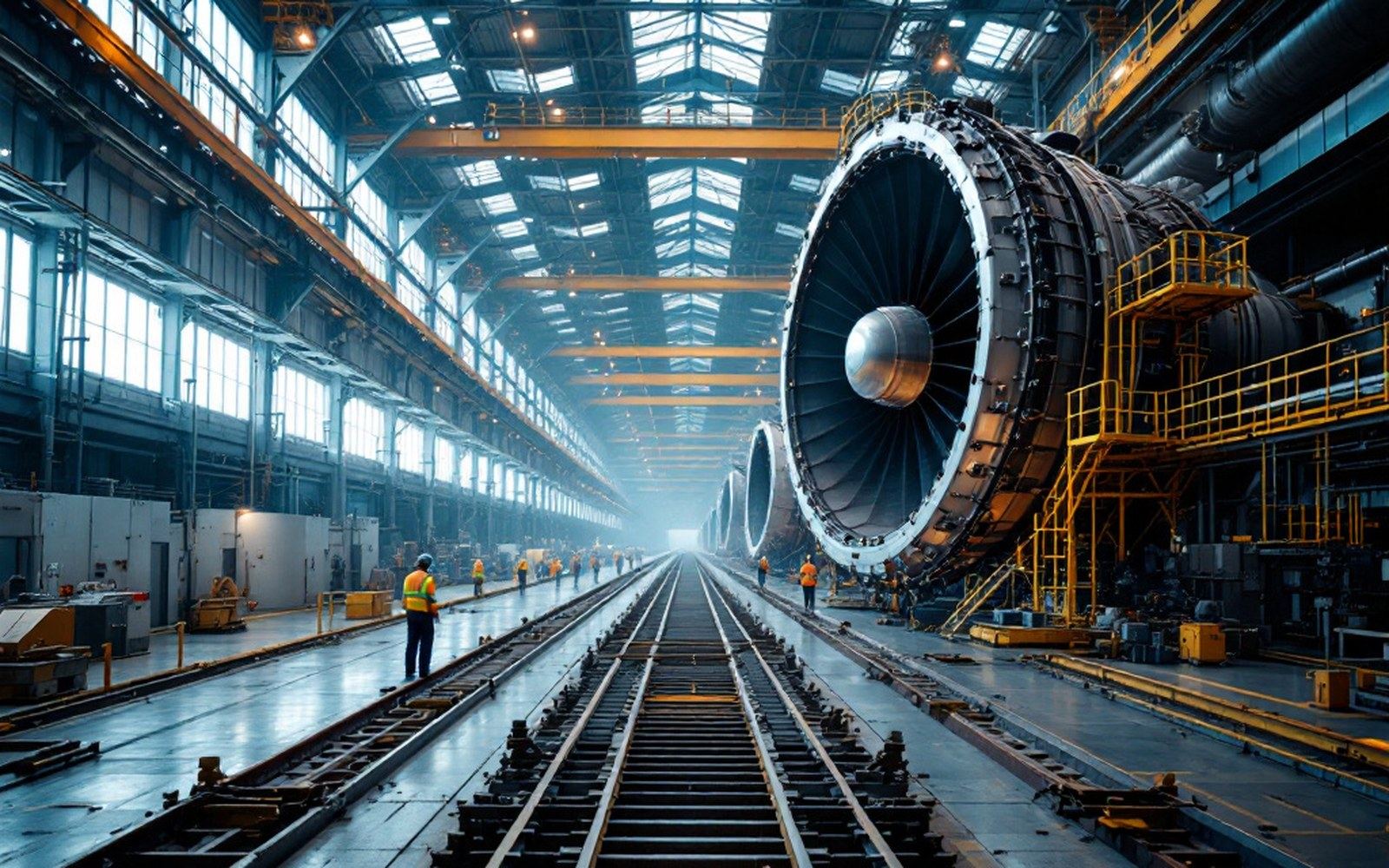
Every large generator ever bolted to a steam turbine or a river's flow has, at its core, a rotor — a shaft of wound copper and iron spinning inside a magnetic field, turning mechanical energy into alternating current. In a synchronised grid, every such rotor spins at exactly the frequency the system demands: 50 Hz in most of the world, 60 Hz in North America. When demand suddenly exceeds supply — a large power station trips offline, a transmission line fails — the grid's frequency begins to fall. Before that fall becomes a blackout, something has to arrest it.
For most of the twentieth century, what arrested it was the rotors themselves. A turbine-generator set at a large thermal plant might weigh several hundred tonnes. When frequency falls, the spinning mass resists the change: it gives up kinetic energy to the grid, buying seconds of time before automatic governors can adjust fuel flow or open a water gate. This property is called grid inertia, and for decades it was simply a free byproduct of operating generators that were large, heavy and synchronised by design.
The technical measure of how much inertia a machine contributes is expressed in seconds — the time the system could theoretically sustain current frequency using only stored kinetic energy before collapsing entirely. A well-stocked grid of large thermal plant might carry an inertia constant of six to eight seconds. That sounds modest until you appreciate what it buys: six to eight seconds during which the rate of frequency change, the ROCOF (rate of change of frequency), is slow enough for governors and grid operators to respond.
What renewable generation does not bring
Solar panels have no rotating mass. They convert photons to electrons through semiconductor junctions; nothing turns. A wind turbine does rotate, but modern variable-speed turbines are decoupled from grid frequency by a power converter — the rotor spins at whatever speed the wind dictates, not at the speed the grid demands. The result is that as thermal generation retires and solar and wind replace it, a grid's physical inertia falls. The same frequency disturbance that once produced a manageable, slow decline now produces a sharper drop, faster, leaving less time to catch.
This is not a theoretical concern. South Australia — a grid of roughly 3.5 gigawatts, well-connected to Victoria but not enormous — experienced this directly. As the state's coal generation closed and its wind fraction rose, the grid became measurably more sensitive to disturbances. In September 2016, a sequence of transmission faults during a severe storm, combined with a low-inertia grid, contributed to a state-wide blackout. The Australian Energy Market Operator's subsequent investigation documented in detail how the rate of frequency change exceeded protection thresholds faster than the system could respond, tripping more generation and cascading the fault.
The response was institutional and technical at once. South Australia introduced minimum inertia requirements — a floor below which the grid cannot legally operate without mitigation. The mitigation was novel: synchronous condensers, machines that look like generators but consume power rather than generate it, spinning their mass continuously purely to provide inertia and frequency response to the grid. Four large synchronous condensers, installed by ElectraNet with Siemens Energy equipment, came online between 2020 and 2021. They carry no turbine, burn no fuel, and exist solely to give the grid the inertia it can no longer derive from generators.
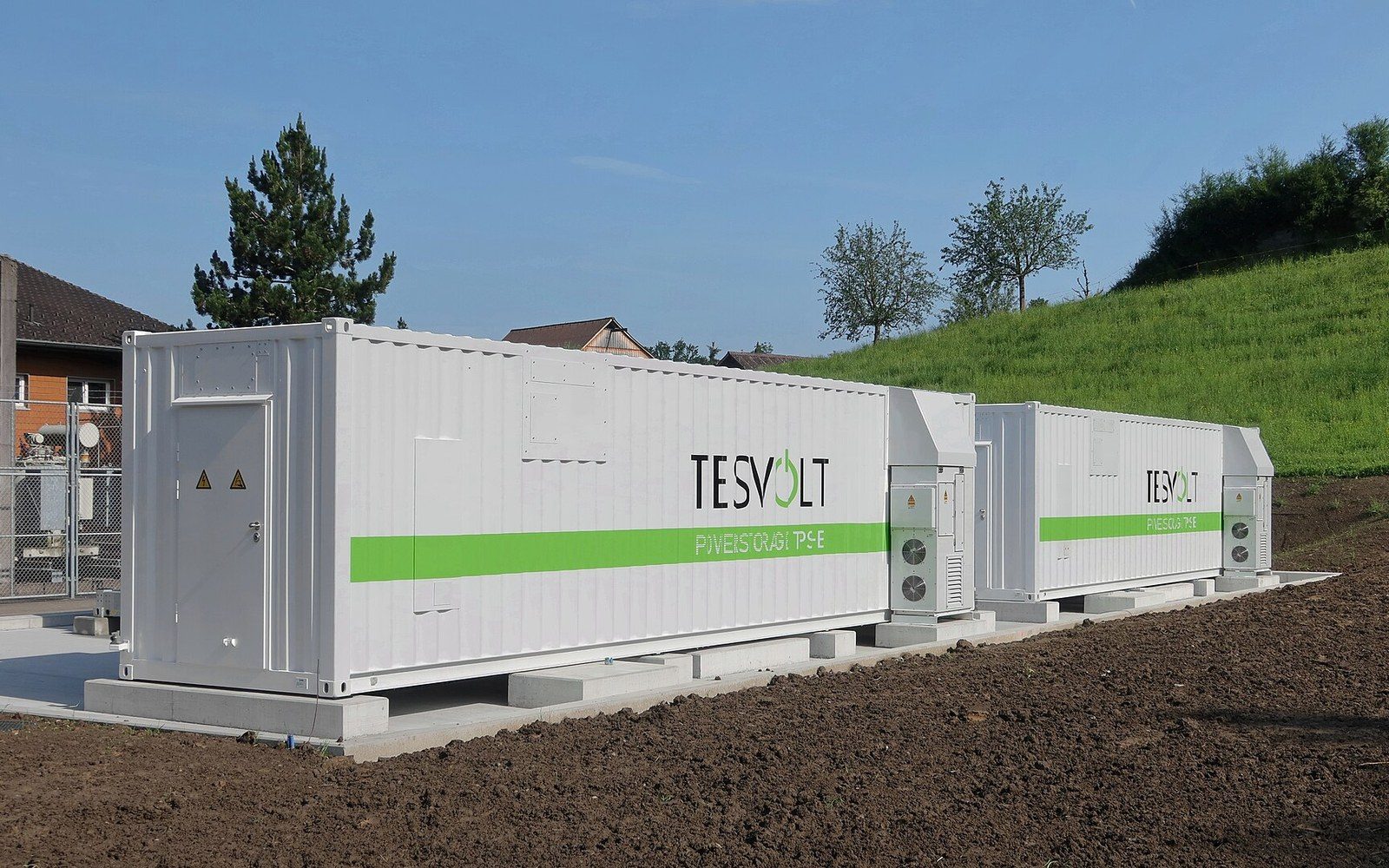
That is not the only solution South Australia deployed. The Hornsdale Power Reserve — Tesla's lithium-ion battery installation, originally 100 MW, expanded to 150 MW — demonstrated something that spinning metal had never managed: a response that arrives not in seconds but in milliseconds. A battery does not need to ramp a governor or crack a steam valve. It responds through power electronics the instant the frequency begins to deviate, before any synchronous machine could detect the problem and react.
The response was institutional and technical at once.
Manufacturing stability electronically
What Hornsdale proved at scale is that power electronics can substitute for inertia — imperfectly, partially, but measurably. The relevant service is called synthetic inertia or fast frequency response, and the International Energy Agency's 2022 analysis of grid stability with high variable-renewables penetration identifies it as one of the central engineering challenges of the energy transition. The mechanics differ from real inertia: a battery does not inherently resist frequency change the way a spinning rotor does, but control algorithms can instruct it to behave as if it did, releasing stored energy in proportion to the rate of frequency change and mimicking the slowing-down behaviour of a large machine.
The distinction matters in practice. Real inertia is passive and instantaneous — physics, not software. Synthetic inertia depends on measurement, computation, communication, and on the battery having charge available. A deeply depleted battery cannot provide synthetic inertia no matter how good the algorithm. Grid operators in Britain, Australia, Ireland and Denmark — all managing grids where thermal plant is retiring fast — have had to develop new market frameworks to procure these services, since the old frameworks assumed inertia was free and ubiquitous.
National Grid ESO in Great Britain publishes a running measure of system inertia alongside its live grid data. The figures show that on high-solar days, system inertia can fall well below 100 gigawatt-seconds, a level that would have been unthinkable as a normal operating condition two decades ago. The grid manages this through a combination of mandatory minimum inertia from synchronous machines still on the system, contracted fast-frequency-response services from batteries and some demand-side assets, and careful scheduling of plant to ensure the inertia floor is not breached.
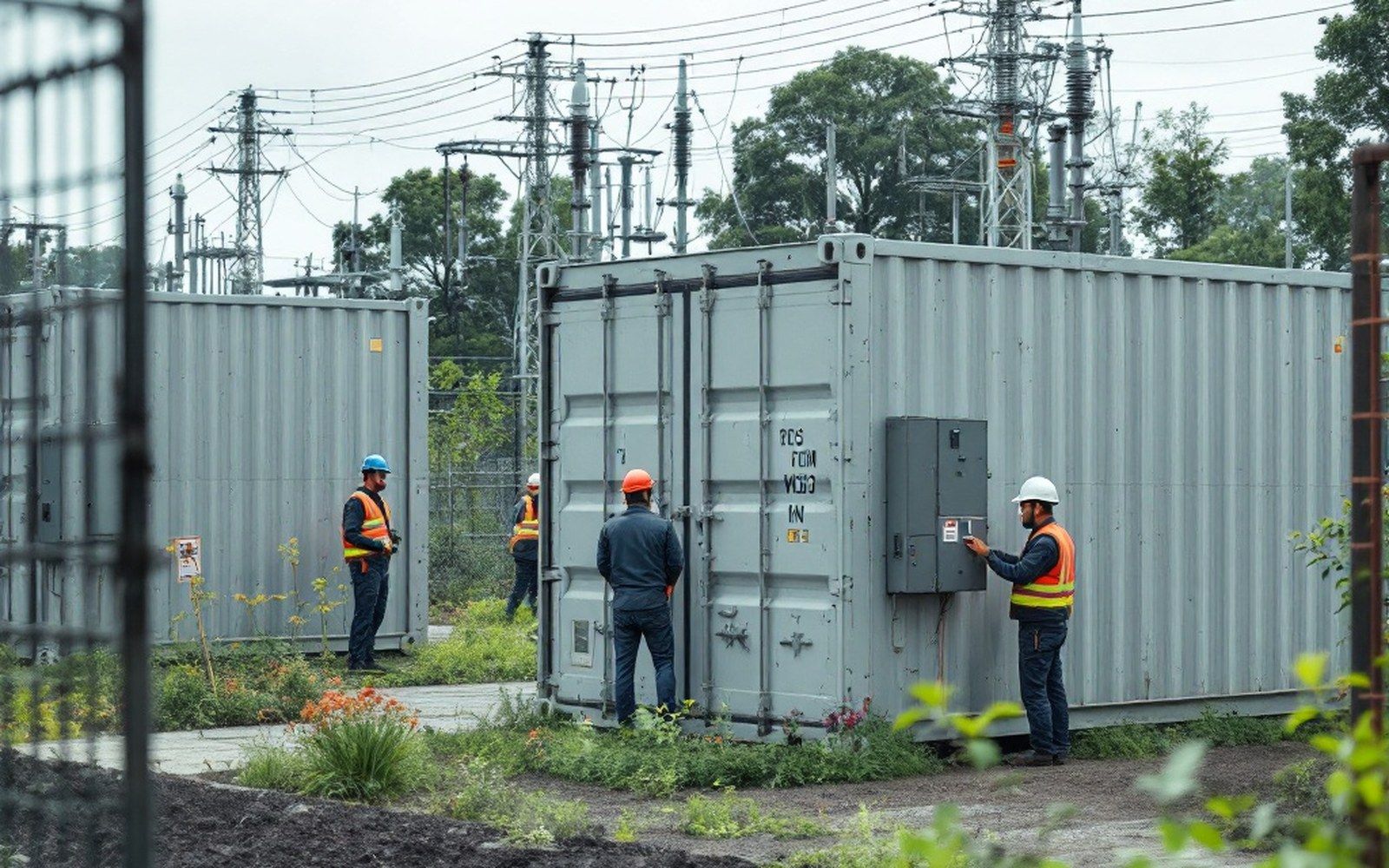
Ireland presents an instructive case because its island grid is small and increasingly wind-heavy. EirGrid has published targets for operating the Irish grid at periods of up to 100% non-synchronous penetration — meaning all generation instantaneously comes from sources that contribute no synchronous inertia — and has been testing those conditions in controlled trials since around 2020. Managing a 100%-renewable instant requires constant monitoring of ROCOF limits and pre-positioning of batteries and synchronous condensers capable of responding to any plausible disturbance.
Fraunhofer ISE, Germany's principal applied energy research institute, has modelled the inertia requirements for a fully renewable European grid in detail, concluding that the transition is technically feasible but requires deliberate planning: inertia services must be procured as explicitly as megawatts of generation capacity, not assumed to appear as a byproduct of operating the system. Lawrence Berkeley National Laboratory has reached parallel conclusions for high-renewable scenarios on the US Western Interconnection.
What the history of grid inertia illustrates, precisely, is that large thermal generators were never just electricity producers. They were simultaneously frequency stabilisers, reactive-power sources and shock absorbers — services provided for free because the machines providing them also happened to be the ones generating power. Replacing the generation without replacing the services was never going to work. The engineering answer, assembled grid by grid across the 2020s, is a portfolio: synchronous condensers for bulk inertia, fast-responding batteries for the millisecond window, and algorithms sophisticated enough to coordinate the two in real time.