The carbon is in the rock, not the fire
Burning cleaner fuel still leaves the limestone problem: roughly 60 per cent of cement's CO₂ comes from the chemistry of the rock, not from the flame beneath it.
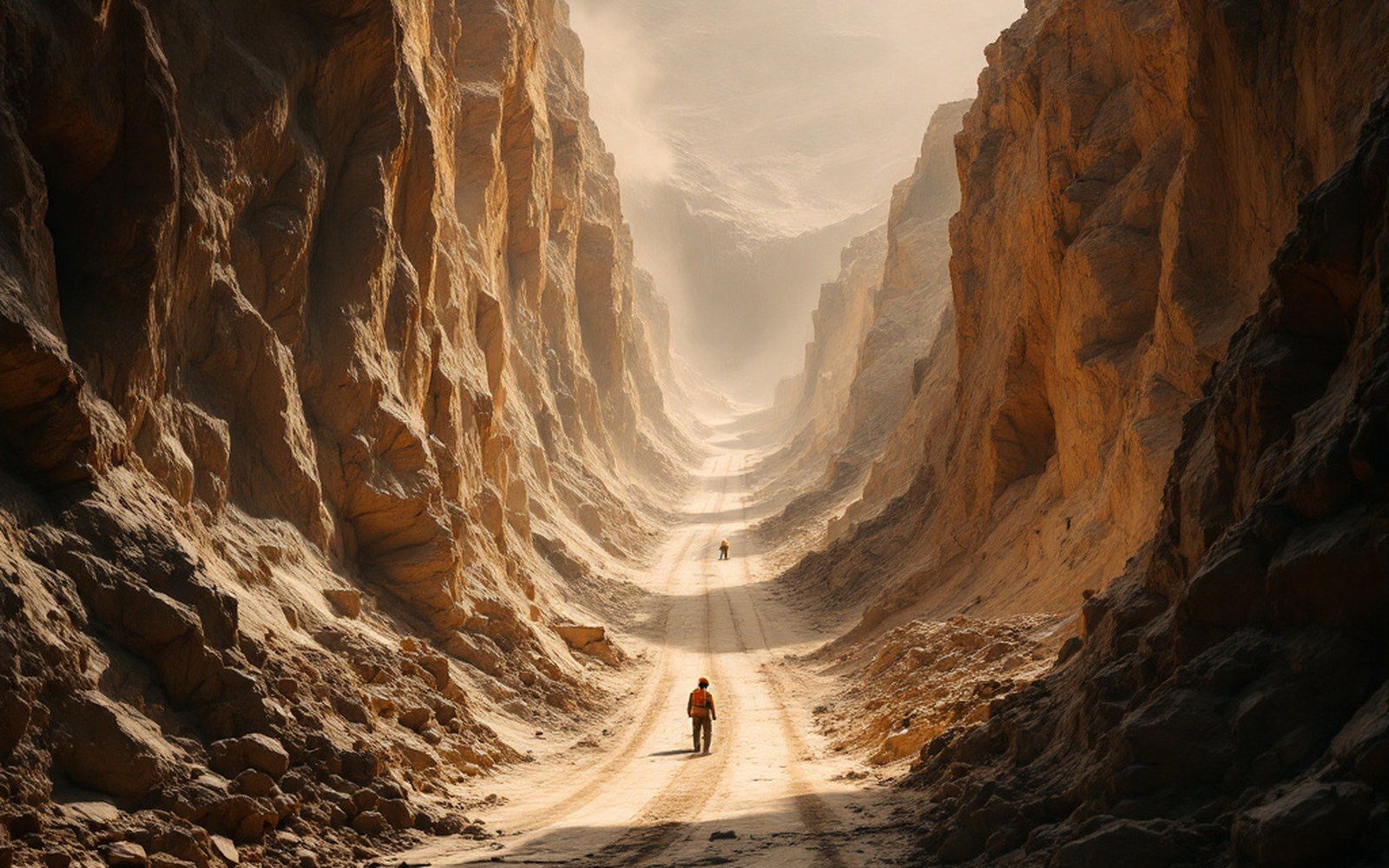
Where the emissions actually come from
Making cement begins with limestone, which is calcium carbonate — CaCO₃. Heat it to around 900 °C and it decomposes: the calcium oxide stays behind to form clinker, and the carbon dioxide leaves up the stack. This is calcination, and it happens regardless of what fuel is burning in the kiln. Run the kiln on green hydrogen, on biomass, on nothing but sunlight concentrated by mirrors — and you still get the same release of CO₂ from the rock itself. The International Energy Agency estimates that calcination accounts for roughly 60 per cent of cement's direct emissions; the combustion that heats the kiln accounts for the remaining 40 per cent. Fixing the fuel fixes less than half the problem.
That arithmetic is not well understood outside the industry. The public framing of industrial decarbonisation tends to treat heat as the problem — if you can heat a process with clean electricity or hydrogen, you are done. Cement breaks that assumption. The calcium carbonate releases its CO₂ at a molecular level that no fuel switch reaches. This is why cement sits alongside steel and aviation as one of the sectors where electrification alone is not sufficient, and why the International Energy Agency's tracking page for cement describes it as one of the "harder-to-abate" industrial processes.
The scale matters. Cement production is around 4 billion tonnes per year globally, and the industry is responsible for roughly 7–8 per cent of global CO₂ emissions. No single country dominates without qualification: China accounts for well over half of world output, India is the second-largest producer, and production is growing in sub-Saharan Africa and Southeast Asia. These are not legacy plants running out their depreciation — they are new capacity, built to serve growing cities, and they will operate for decades.
The clinker fraction and its limits
The one lever that works at scale today is reducing the clinker fraction in the final cement: substituting fly ash from coal plants, slag from steelmaking or calcined clay for a portion of the clinker itself. Every tonne of clinker displaced is a tonne whose calcination emissions do not occur. Portland cement by specification can carry a significant substitution, and some blended cements in use today run at clinker-to-cement ratios well below the historical norm of close to one. The global average ratio was still around 0.72 as of recent IRENA assessments — meaning that substantial headroom has already been used, but also that further substitution is constrained by the chemistry of what can replace clinker without compromising the concrete's structural performance.
Fly ash and blast-furnace slag are increasingly scarce co-products: as coal plants close and steelmakers shift toward electric arc furnaces that produce a different kind of slag, the cheapest supplementary cementitious materials will become harder to source. Calcined clays — low-grade clays heated to drive off water and activate their pozzolanic properties — are the most abundant alternative, but calcining them requires energy and still produces some process emissions of its own, though far less than calcining limestone.
If the calcination CO₂ cannot be eliminated, it can in principle be caught.
The arithmetic of substitution has a ceiling. Below a certain clinker fraction, ordinary Portland-based cement either fails to meet strength requirements or fails to set reliably. Novel cements based on different chemistries — calcium sulfoaluminate, magnesium oxide silicate, belite-rich clinkers — can push below that ceiling, but they require changes to production lines, to testing regimes, and to decades-old construction standards. Adoption is real but slow. No alternative chemistry has yet demonstrated the combination of performance, cost and scale that would make it a systemic replacement.
What capture would require
If the calcination CO₂ cannot be eliminated, it can in principle be caught. Carbon capture applied at cement plants is technically feasible: the flue gas from a cement kiln, while more dilute than from some industrial sources, is a manageable capture target, and pilot projects exist. Heidelberg Materials — one of the world's largest cement producers — is building a full-scale carbon capture installation at its Brevik plant in Norway, targeting around 400,000 tonnes of CO₂ per year when operational. That project, backed by Norwegian state funding, is the largest announced cement CCS project to date as of 2024.
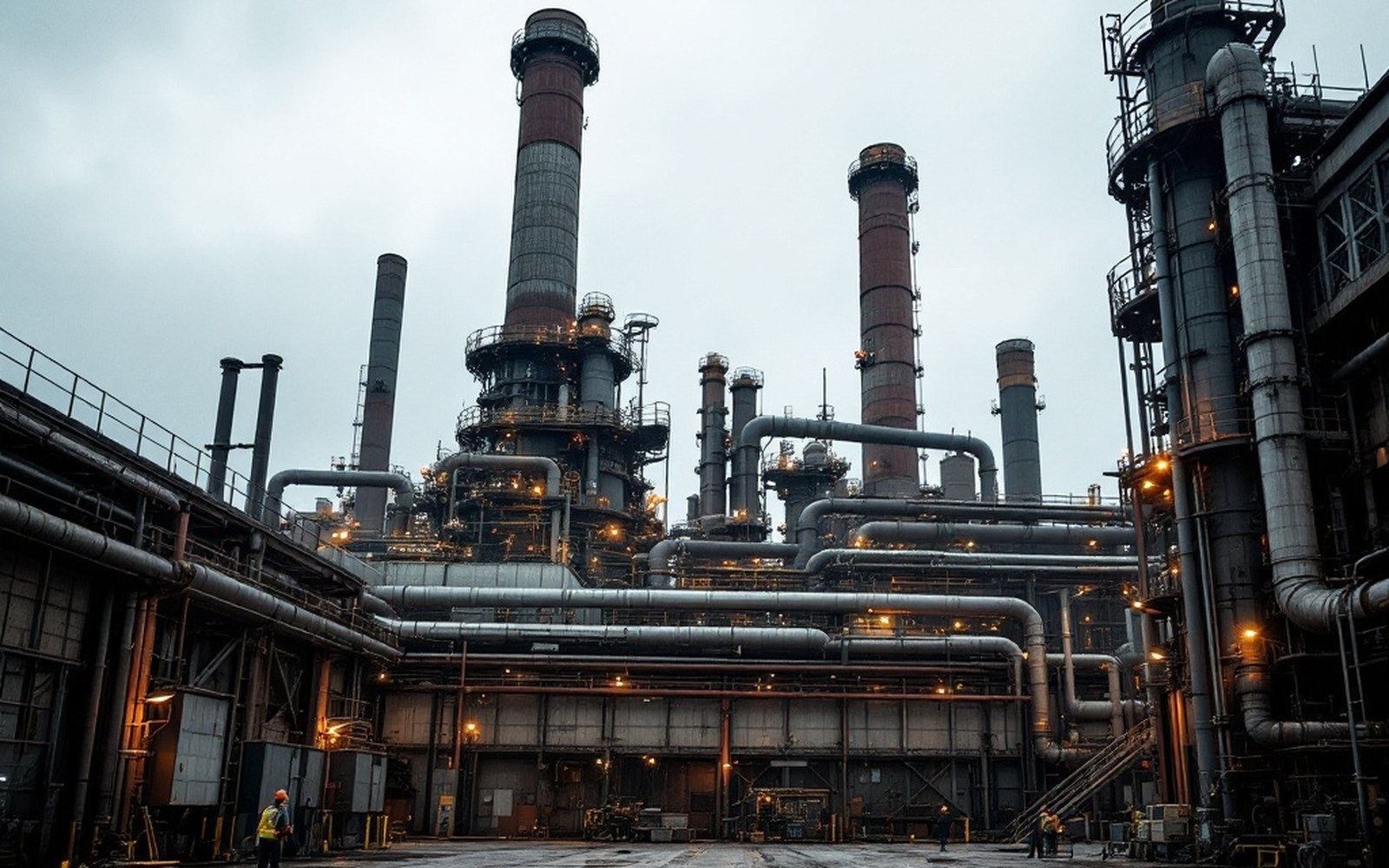
The challenges are not primarily chemical. The energy penalty of capture — the additional energy needed to separate, compress and transport the CO₂ — is substantial, and at a cement plant whose kiln already burns fuel, that energy has to come from somewhere. Storage requires suitable geology nearby or accessible by pipeline or ship. The cost per tonne of CO₂ avoided at cement plants with capture has been estimated in the range of €60–120 per tonne by various European analyses, though figures vary significantly with plant configuration, energy prices and transport infrastructure. The Global CCS Institute tracks cement CCS projects among a small handful of industrial applications globally; at current deployment rates, captured volumes remain orders of magnitude below what the sector produces.
Direct air capture — pulling CO₂ from ambient air rather than from the stack — is sometimes proposed as a backstop: let the emissions out, then recapture them from the atmosphere. But direct air capture works against a concentration of roughly 420 parts per million, compared with several per cent in cement flue gas; it is far more energy-intensive per tonne as a result. The economics and energy demand are addressed in detail elsewhere; the relevant point here is that using it to offset cement's process emissions would require enormous installed capacity drawing enormous amounts of clean electricity.
The honest summary is this: cement is an unsolved problem. Not unsolved in the sense that no pathway exists — clinker substitution, novel cements, and carbon capture at the stack are all real options — but unsolved in the sense that none of them, individually or in combination, has yet been deployed at a scale that would substantially reduce the industry's total emissions. The carbon is fixed in the limestone long before the kiln is lit. Getting it out without releasing it to the atmosphere remains the central engineering problem that the sector has not resolved.