Clinker, and what can replace it
The supplement cuts the hardest fraction of cement's emissions; what it can substitute depends on what the concrete has to do.
The problem is the rock
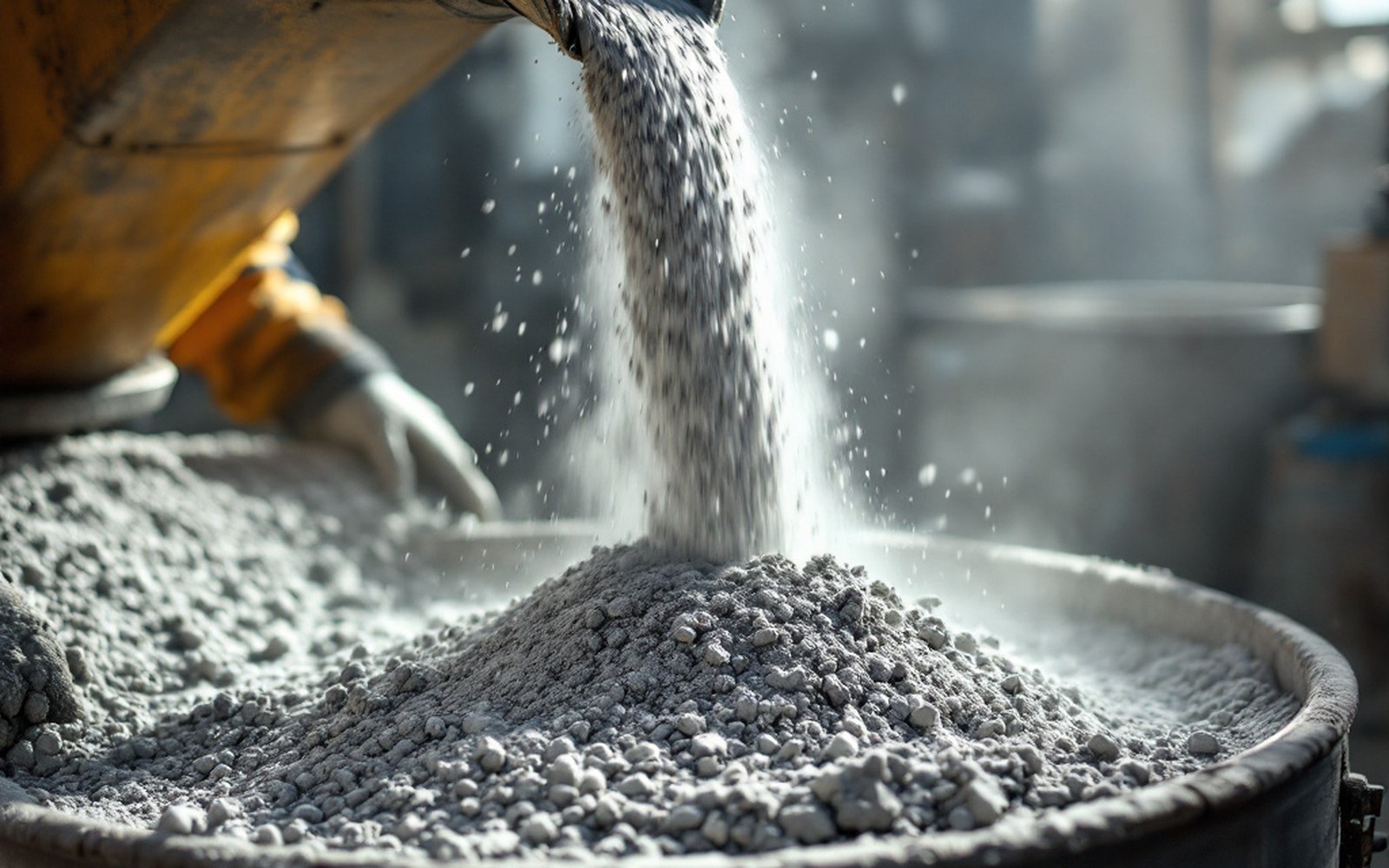
Portland cement — the grey powder that, mixed with water, sand and aggregate, becomes concrete — is roughly 70–80 percent clinker by mass. Clinker is made by heating limestone and clay to around 1,450 °C in a rotary kiln. That heat drives off carbon dioxide from the limestone itself, a chemical reaction called calcination. It accounts for roughly 60 percent of cement's total CO₂ emissions, and no change to the fuel eliminates it. Burn the kiln with green hydrogen and you still get the same calcination emissions. This is why cement sits in a different category from steel or electricity: the carbon is structural, not combustion.
Global cement production runs at around 4 billion tonnes per year, with most of that concentrated in China, India and Southeast Asia. Even modest reductions in the clinker fraction — the share of clinker in finished cement — translate to hundreds of millions of tonnes of CO₂.
What goes in instead
The supplements that displace clinker are called supplementary cementitious materials, or SCMs. The major industrial SCMs are fly ash, a residue from coal combustion; ground granulated blast-furnace slag, a byproduct of iron production; and natural pozzolans, volcanic materials that react chemically with the calcium hydroxide released as clinker hydrates.
Fly ash and slag are not new materials. Their use in blended cements dates back decades in Europe and North America, and European standards under EN 197 already permit clinker fractions as low as 5–20 percent in some blended cement types. The performance of such blends varies: concrete made with high-slag or high-fly-ash cements gains strength more slowly, which matters for construction timelines. It performs differently under carbonation and chloride exposure, which matters for bridges and coastal structures. Specifying engineers must account for this.
The supplements that displace clinker are called supplementary cementitious materials, or SCMs.
The first structural limit on SCM substitution, then, is performance: what the concrete has to do sets the ceiling. A foundation slab poured slowly in a temperate climate tolerates a high supplement fraction far better than a precast prestressed beam that must reach stripping strength within 16 hours.
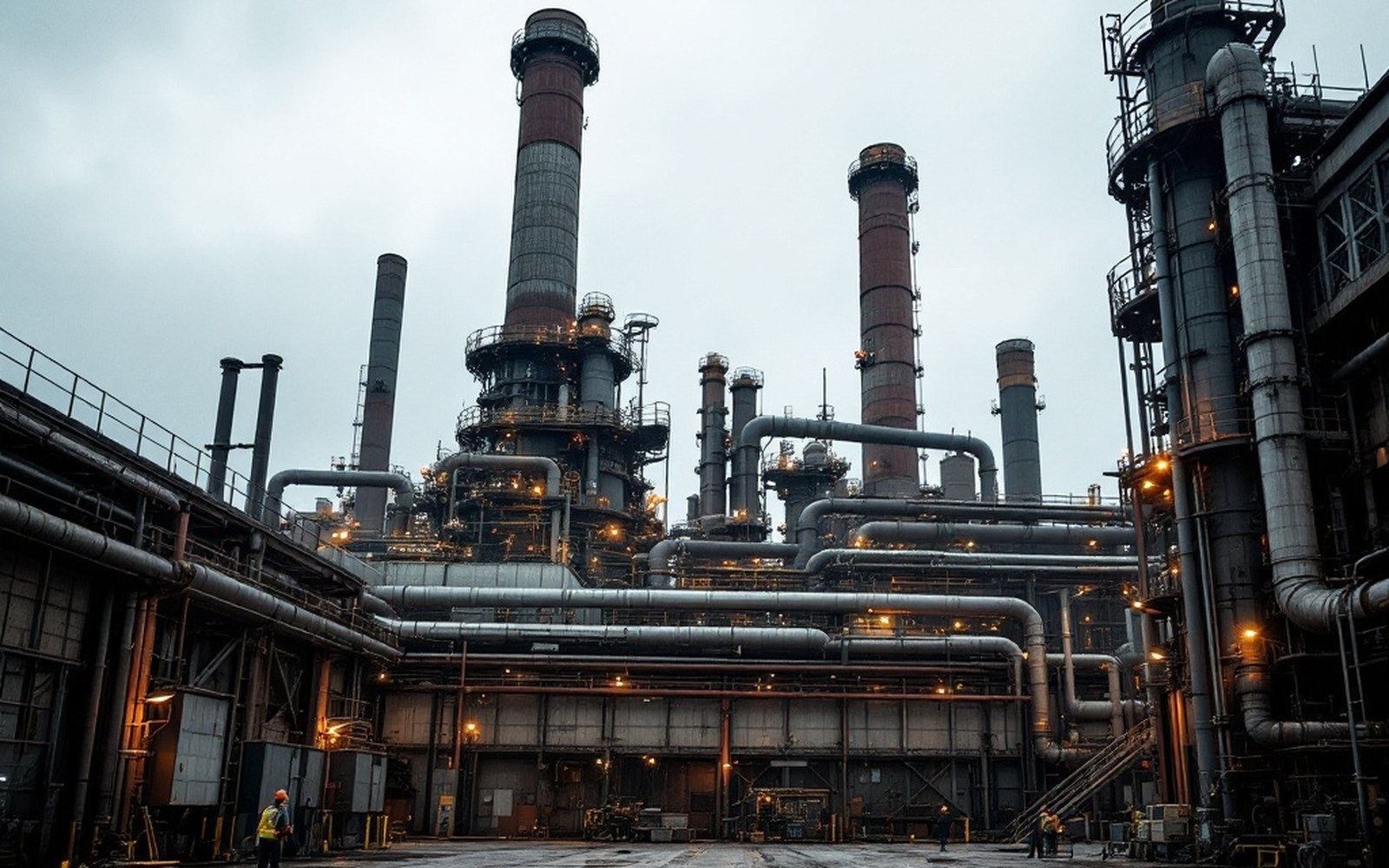
The second limit is supply. Fly ash depends on coal combustion; as coal plants close, fly ash becomes scarcer rather than more abundant. Slag depends on blast-furnace iron production; the shift toward electric arc furnaces, which melt scrap rather than reduce ore, cuts slag output. The materials that conveniently complement coal and blast-furnace iron decline alongside the industries that make them.
Where the gap goes next
Calcined clays — particularly low-grade kaolinite clays heated to around 800 °C — are attracting serious attention as a more geographically abundant SCM. Research programs at EPFL in Lausanne and IIT Madras have demonstrated clinker factors below 50 percent in structural-grade blends using calcined clay and limestone together, a system labelled LC3 (limestone calcined clay cement). LC3 does not eliminate emissions, since the clay itself requires heating and the blend still contains clinker, but the energy and CO₂ per tonne are substantially lower than clinker production. Field trials have run in India, Cuba and sub-Saharan Africa, where kaolin deposits are widespread and cement demand is growing fastest.
Beyond SCMs, two other levers exist but operate more slowly. Better mix design — using less cement per cubic metre of concrete without reducing strength — requires investment in testing and specification. Carbon capture on the kiln stack remains a cost-heavy option that no plant has deployed at full commercial scale. Between them sits the clinker ratio: imperfect, supply-constrained, performance-limited, and currently the only tool making a measurable dent today.