Three or four units for one
The physics of why a heat pump's output routinely exceeds its input — and what that number means in practice
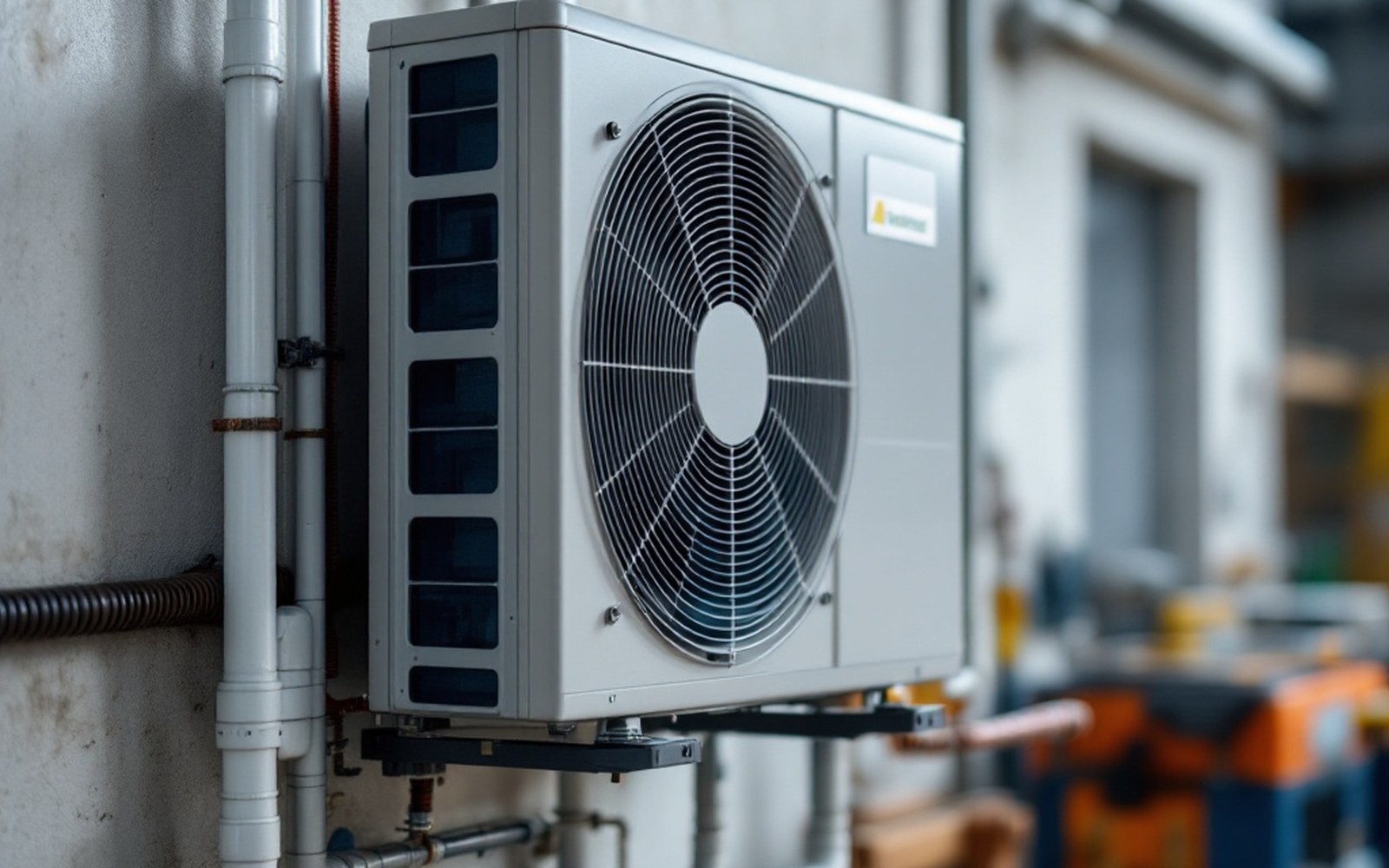
The refrigeration cycle run in reverse
A heat pump does not burn anything. It does not convert electrical energy into heat by resistance, the way a kettle does. Instead, it moves thermal energy from one place to another, and because that thermal energy was already there — in the outdoor air, the ground, a river — the machine's output can be a multiple of the electricity it consumed. Nothing is conjured from nowhere; the accounting is just wider than a single appliance.
The device at the centre of this is a vapour-compression cycle: a refrigerant circulates in a closed loop, evaporating at low pressure on the cold side (absorbing heat from the source), then being compressed, which raises its temperature, then condensing on the warm side (releasing heat into the building or process), then expanding back to low pressure through an expansion valve, and beginning again. A domestic refrigerator runs the same cycle; the heat pump runs it between the outdoors and a home rather than between a food compartment and a kitchen.

The ratio of useful heat output to electrical energy input is the coefficient of performance, or COP. A resistance heater has a COP of 1.0 by definition: one unit of electricity becomes one unit of heat. A heat pump in typical winter conditions might deliver a COP of 3.0 or 4.0 — three or four units of heat for each unit of electricity drawn from the grid. The extra two or three units came from the outdoor environment, moved by the compressor rather than created by it.
What the coefficient of performance actually depends on
The COP is not a fixed property of a machine. It varies continuously with the temperature difference between the source and the sink — the colder the outdoor air, the harder the compressor must work, and the lower the COP. Manufacturers publish rated figures at standard test conditions (typically 7°C ambient for air-source units, per EN 14511, the European test standard), but real performance across a heating season is better captured by the seasonal COP, sometimes written SCOP or Heating Seasonal Performance Factor (HSPF) in North American markets.
The physics imposes a ceiling. The maximum possible COP for any heat-moving device is set by the Carnot limit: COP_max = T_hot / (T_hot − T_cold), where temperatures are in kelvin. At an outdoor temperature of 0°C (273 K) delivering heat at 50°C (323 K), the Carnot COP is 323 / 50, or about 6.5. Real machines reach roughly 40–60% of the Carnot limit depending on compressor design, refrigerant choice, and heat-exchanger area. Closing the temperature gap — underfloor heating running at 35°C rather than radiators running at 70°C — pushes real performance closer to that ceiling.
Ground-source and water-source units consistently outperform air-source units because the ground below frost depth and a river are warmer in winter and more stable than outdoor air. A well-sized ground-source installation in a temperate climate typically runs at a seasonal COP of 3.5 to 5.0. Fraunhofer ISE, which has monitored field installations in Germany for years, reports median seasonal COPs for ground-source residential units in the range of 3.9 to 4.2, depending on the heating system the pump feeds into.
Heat pumps are not new, but the scale of deployment has changed sharply.
Air-source units, being cheaper to install (no ground loop, no borehole), dominate the residential market and are more sensitive to the outdoor conditions that matter most — the coldest days of the year. Modern inverter-driven compressors modulate their speed to match the building's heat demand rather than cycling on and off at full power, which substantially improves part-load efficiency and protects seasonal performance. Cold-climate air-source heat pumps, designed explicitly for low ambient temperatures, can now operate usefully down to −25°C or below, though with a reduced COP.
The number at scale
Heat pumps are not new, but the scale of deployment has changed sharply. The International Energy Agency tracked global heat pump sales and found that annual shipments nearly doubled between 2020 and 2022 in several major markets, with Europe crossing ten million units installed across all building types. China is the largest single market by unit volume, primarily in mini-split configurations. The United States had roughly 4.3 million heat pump units sold in 2022, surpassing gas furnace sales for the first time.
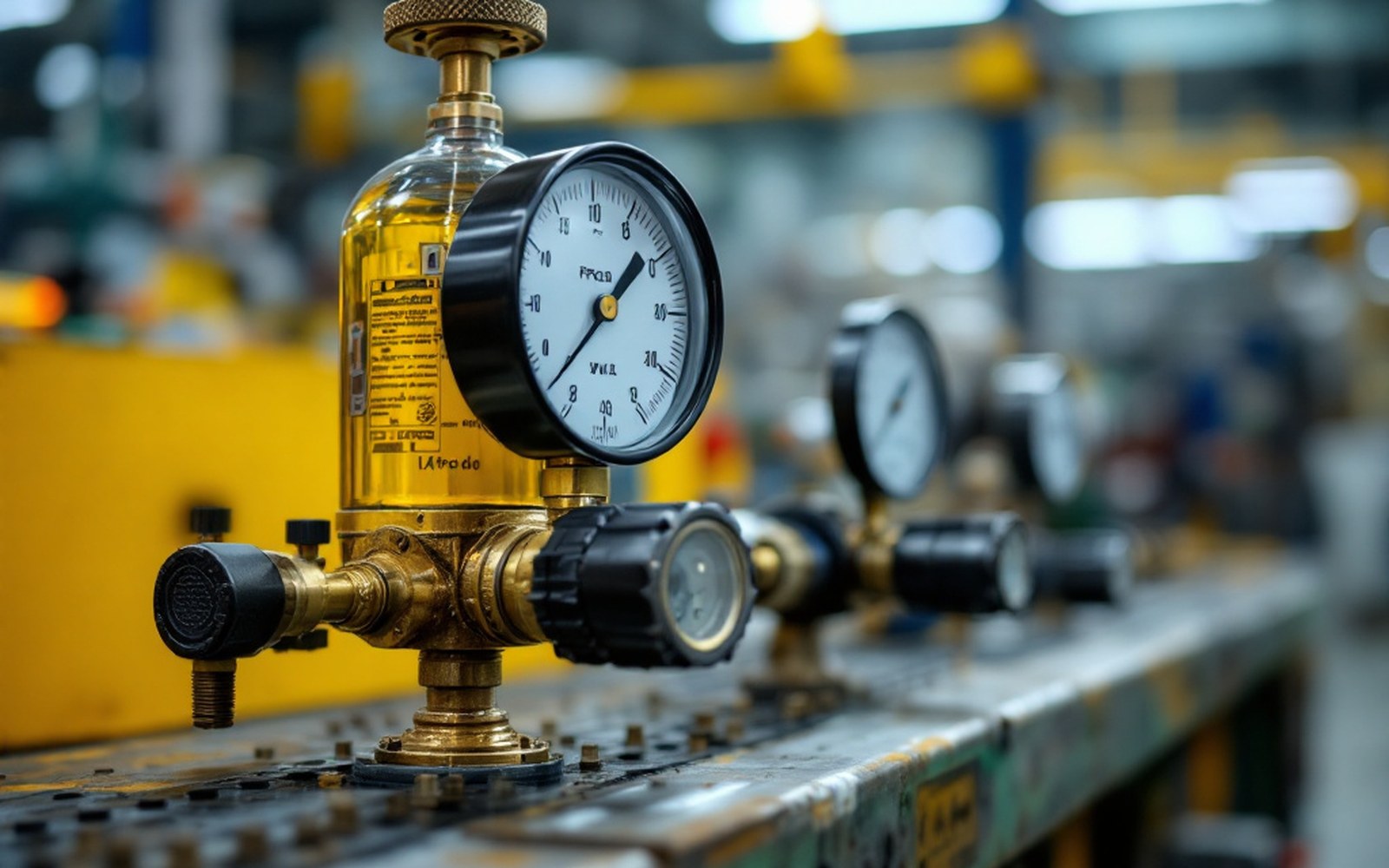
What the COP means at grid scale is that every unit of electricity doing heat-pump work displaces more fossil fuel than the same electricity doing resistance heating would. A gas boiler operating at 85% efficiency delivers 0.85 units of heat per unit of fuel; a heat pump with a COP of 3.0 running on the same grid electricity delivers 3.0 units of heat per unit. Even where the grid carries a significant fossil share, the arithmetic often favours the heat pump over direct combustion. The National Renewable Energy Laboratory has modelled this breakeven for U.S. grid conditions and found that heat pumps reduce emissions compared to gas heating across virtually the entire continental United States under current grid mixes.
The practical constraints are real. The refrigerant problem is one: the working fluids that make high-COP systems possible at low temperatures are themselves potent greenhouse gases if they leak. Low-GWP alternatives — CO₂ (R-744), propane (R-290) and HFO blends — are available or in commercial deployment but require different compressor pressures and system designs, and the transition is underway at different speeds in different regulatory environments. Performance in very cold climates remains a genuine engineering challenge, not a solved one, and the performance gap between laboratory and field conditions is a recurring finding in monitoring studies.
District-scale systems sidestep some of the individual-unit constraints by using large, high-efficiency heat pumps feeding a pipe network, with source temperatures drawn from rivers, sewage, or industrial waste heat. The city of Stockholm draws heat from the Baltic Sea through what is one of the largest heat-pump installations in the world, operating at a scale where individual COP variations matter less than fleet-average seasonal performance. Boden, in northern Sweden, has built an industrial-scale heat-pump system as part of a broader electrification effort anchored to the green steel development in the region.
The coefficient of performance is the right number to track: not peak-rated COP from a brochure, but seasonal, field-measured COP at the temperature conditions of the place where the machine runs. That number, and the carbon intensity of the electricity feeding the compressor, together determine whether the physics of moving heat rather than making it actually delivers what the thermodynamics promise.