The refrigerant problem
Most heat pumps move heat by evaporating and condensing a fluid; if that fluid leaks, it does climate damage in its own right.
What the working fluid actually is
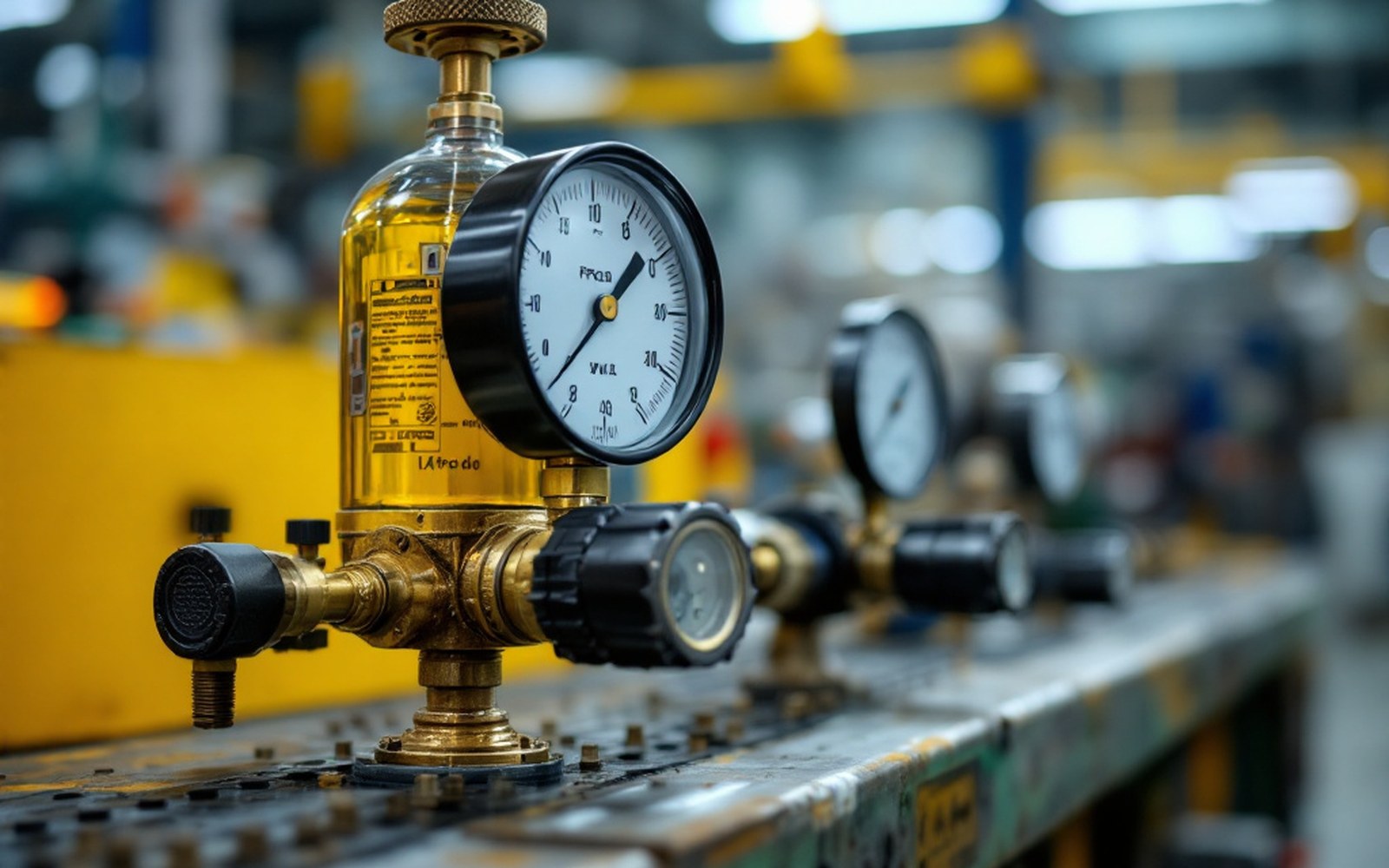
A heat pump does not generate heat — it circulates a refrigerant, a compound chosen because it changes phase at convenient pressures and temperatures. The refrigerant absorbs heat from one side by evaporating, then releases it by condensing on the other. The physics is elegant. The fluid, in most currently installed machines, is less so.
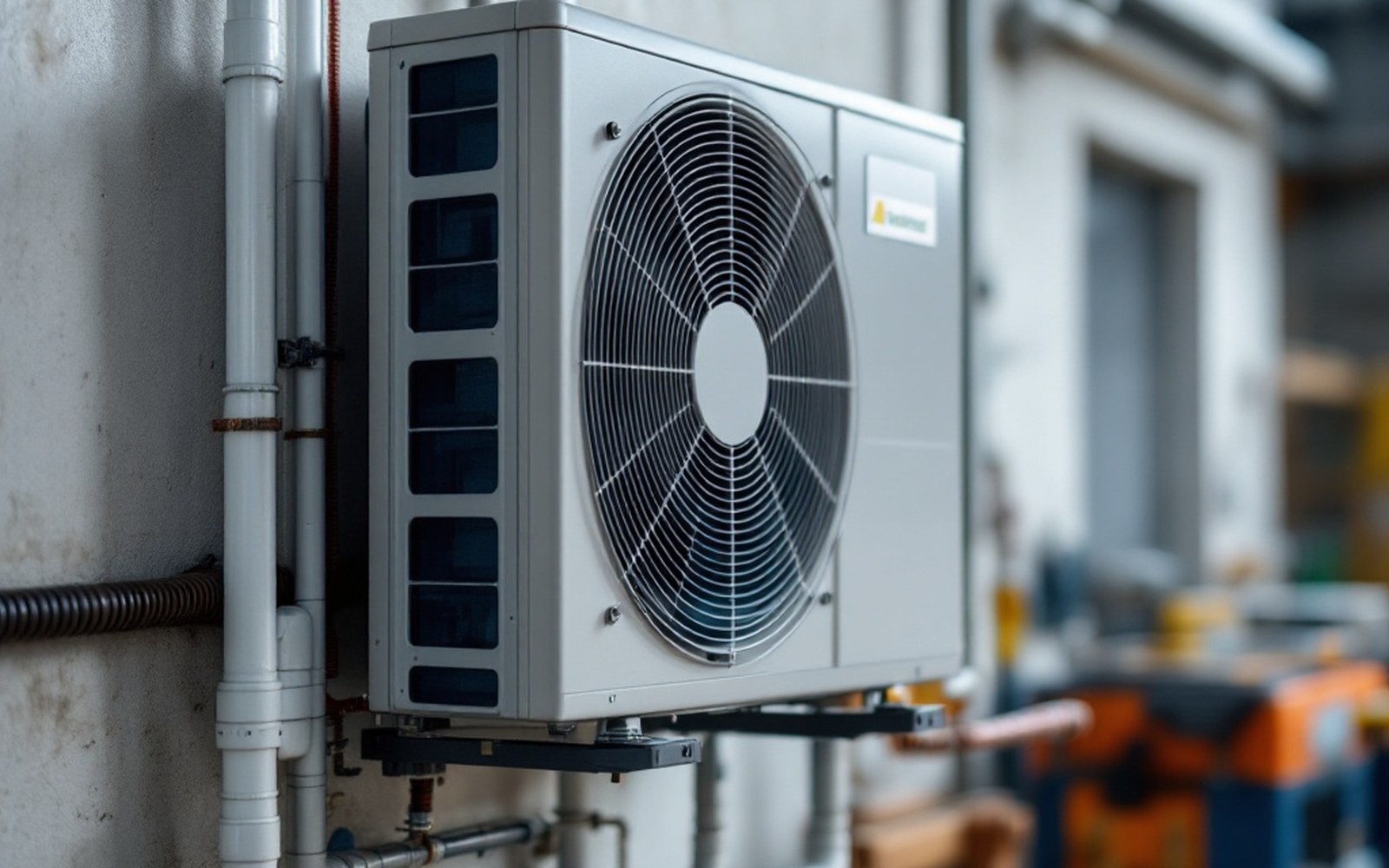
The dominant refrigerants in residential and commercial heat pumps today are hydrofluorocarbons, or HFCs — synthetic compounds that carry no chlorine and so do not attack the stratospheric ozone layer. That was by design: HFCs replaced chlorofluorocarbons and hydrochlorofluorocarbons under the Montreal Protocol, starting in the 1990s. But HFCs are potent greenhouse gases. R-410A, the refrigerant in the majority of split-system units sold in the 2010s, has a global warming potential of roughly 2,088 times that of carbon dioxide over a hundred years. A single kilogram released to atmosphere — during installation, servicing or end-of-life disposal — does the same warming work as roughly two tonnes of CO₂. For a typical residential unit containing one to two kilograms of charge, a single careless service visit can matter.
The problem is not hypothetical. Leak rates in real installations — estimated by the International Energy Agency and others — commonly run at four to eight percent of total charge per year across a fleet. Over a machine's fifteen-to-twenty-year life, a significant fraction of its refrigerant ends up in the atmosphere.
The Kigali Amendment and what it requires
The 2016 Kigali Amendment to the Montreal Protocol set a schedule for phasing down HFCs, with different timelines for developed and developing economies. It does not ban them outright, but it cuts their permitted production and consumption substantially — roughly 85 percent below a baseline by 2036 for developed countries. That timetable is now driving the industry toward lower-global-warming-potential alternatives, and it is doing so at exactly the moment when heat pump deployment is accelerating.
The 2016 Kigali Amendment to the Montreal Protocol set a schedule for phasing down HFCs, with different timelines for developed and developing economies.
The leading candidate replacement in residential equipment is R-32, a single-component HFC with a global warming potential of 675 — lower than R-410A, but still substantial. Beyond that, two broad families are under development and early deployment: HFOs (hydrofluoroolefins) such as R-1234yf, which have global warming potentials below ten, and natural refrigerants — propane (R-290), isobutane (R-600a), ammonia (R-717) and CO₂ (R-744) — which have global warming potentials of three or below.
Why switching is not straightforward
Changing the refrigerant is not a matter of draining one fluid and topping up with another. Each working fluid operates at different pressures and requires different compressor designs, lubricating oils, seals and pipe wall thicknesses. R-410A operates at high pressure; propane operates at lower pressures but is flammable, which changes the engineering requirements for indoor units and influences where equipment can be installed and how it must be serviced. Ammonia, long used in industrial refrigeration, is toxic at low concentrations and requires containment standards that residential installers are not routinely trained for.
CO₂ — known in the industry as R-744 — operates at transcritical pressures, meaning the high side of the circuit exceeds the fluid's critical pressure, which requires purpose-built hardware running at pressures several times higher than HFC systems. Japanese manufacturers have deployed CO₂ heat pump water heaters at commercial scale since the early 2000s under the trade name Eco Cute, demonstrating that the engineering is solved; but it is solved for that application at that scale, and scaling to space heating in European climates requires further adaptation.

Fraunhofer ISE and others have published work characterising the performance differences: natural refrigerant systems can match or exceed HFC systems in the coefficient of performance under well-matched conditions, but installation cost and the current shortage of trained technicians remain practical barriers. The refrigerant transition is, in short, a supply-chain and workforce problem as much as it is a chemistry one — and it lands at the same time as the industry is trying to train enough installers to meet rising demand.